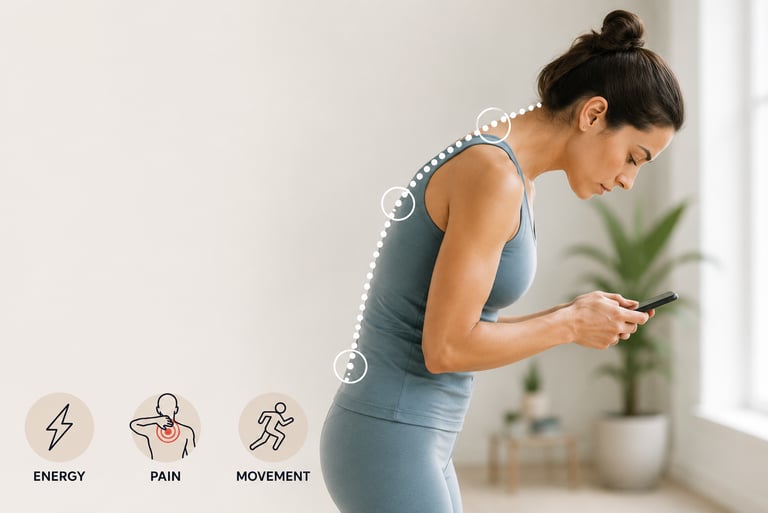
How Posture Affects Energy, Pain, and Movement
Summary
Good posture is often overlooked, especially with long hours spent sitting at desks, working on computers, and looking down at phones. Over time, poor posture can affect movement, breathing, muscle tension, energy levels, and overall physical health.
What Posture Actually Is
Posture is more than simply sitting or standing up straight.
It refers to how the spine, shoulders, hips, and muscles align to support the body during movement and rest.
Proper alignment helps distribute weight evenly across muscles and joints, reducing unnecessary strain and improving movement efficiency.
How Poor Posture Affects the Body
Poor posture can cause ongoing stress on muscles and joints. Sitting, standing, or sleeping in unnatural positions for long periods may contribute to neck pain, shoulder tension, stiffness, headaches, muscle fatigue, and reduced mobility.
Dr Shawn Nelson from Piontes Chiropractic explains that poor posture can also affect the vertebral column and overall spinal health.
Spine
The spine is designed to absorb and distribute force during daily movement such as walking, bending, lifting, and stretching.
Over time, poor posture may change spinal alignment, placing additional pressure on muscles, joints, and connective tissue. This can increase the risk of discomfort, strain, and injury.
Breathing
Posture can also affect breathing.
Common habits such as:
slouching in a chair
bending forward over a computer
rounded shoulders
forward head posture while using a phone, may reduce the efficiency of lung expansion.
Some clinics and physiotherapists note that poor posture may reduce lung capacity by up to 30%.
Sleep
Sleeping posture also plays a role in physical recovery and breathing quality.
Poor sleeping positions often lead to:
neck strain
back pain
poor breathing patterns
interrupted sleep
Sleep disruption may further affect digestion, recovery, and energy levels.
Neck Pain
Looking down at screens for long periods places extra strain on the neck and upper back.
Over time, muscles are forced to work harder to support the head in an unnatural position.
This may create:
muscle tension
stiffness
headaches
fatigue
nerve irritation
Common Causes of Poor Posture
Several daily habits contribute to poor posture over time.
Prolonged Sitting
Long periods of sitting, especially while leaning forward at a desk, can strain the neck, shoulders, and lower back.
Poor Ergonomics
Workstations that are not set up properly may force the body into awkward positions for extended periods.
Sedentary Lifestyle
Lack of movement weakens the muscles that help support posture and spinal alignment.
Smartphone Use
Smartphones are among the most common contributors to poor posture today, especially due to prolonged forward head posture. Simple Posture Corrections
Awareness
The first step is recognizing how posture affects the body during daily activities.
Small adjustments, when repeated consistently, often make a significant difference over time.
Movement
Regular movement and strengthening exercises may help improve posture and reduce muscle strain.
Shoulder Blade Squeeze
Sit or stand upright and gently squeeze the shoulder blades together. Hold for five to ten seconds before releasing.
This exercise helps strengthen the muscles that support the upper back and shoulders.
Chin Tucks
Sit or stand tall and gently tuck the chin inward while keeping the spine upright. Hold for a few seconds and repeat.
This exercise may help improve neck alignment and reduce forward head posture.
Wall Angels
Stand against a wall with the back and arms touching the surface. Slowly raise the arms upward in a controlled movement while maintaining contact with the wall.
This movement helps improve shoulder mobility and postural awareness.
Conclusion
Small posture habits repeated daily can affect movement, breathing, energy levels, and long-term physical comfort more than many people realize.
Improving posture is not about standing perfectly straight all the time. It is about reducing unnecessary strain on the body and creating better movement patterns over time.
References
Alliance Orthopedics
Piontes Chiropractic
Cleveland Clinic
Mayo Clinic